
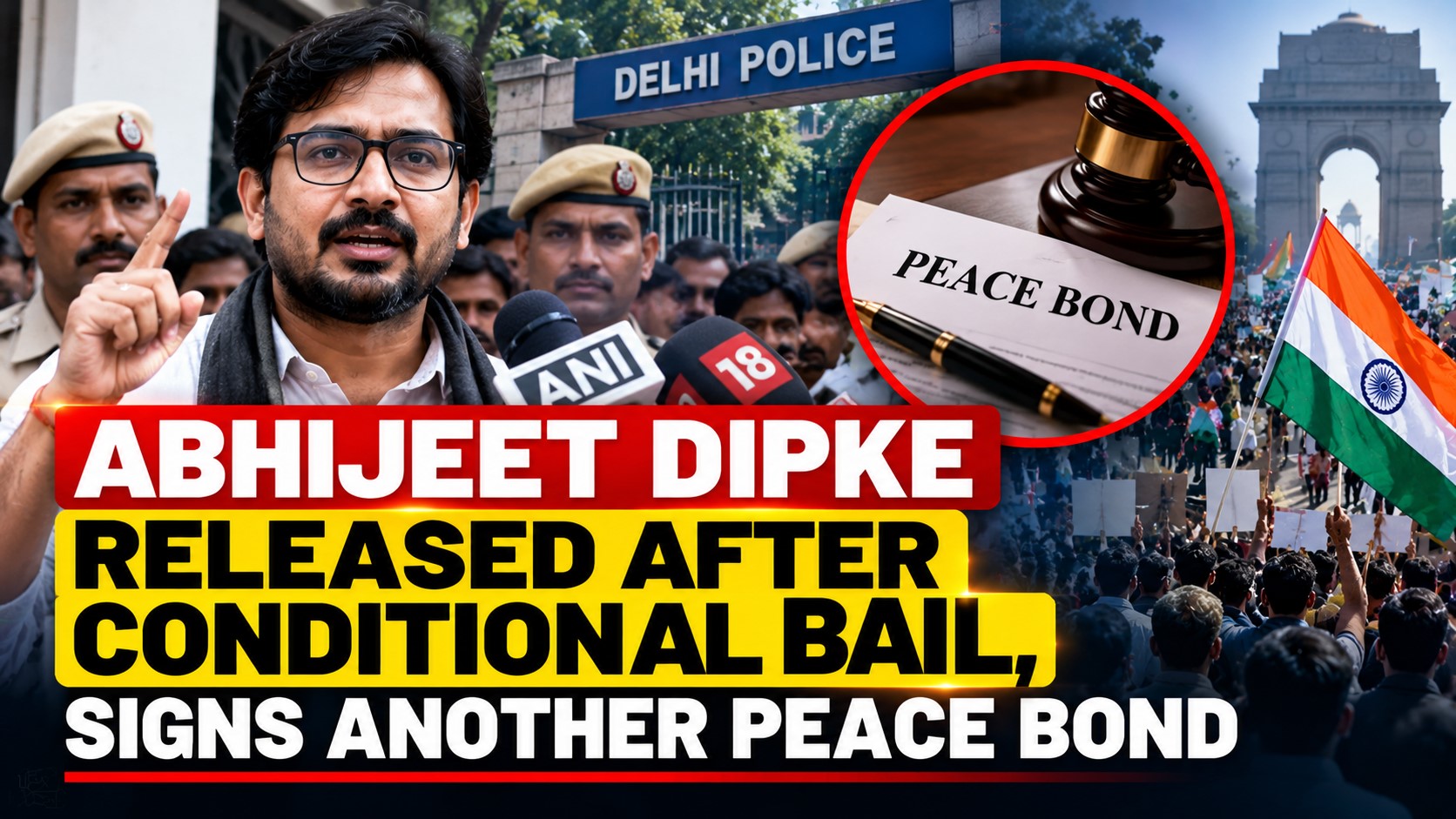
Abhijeet Dipke, founder of the Cockroach Janta Party (CJP), was released on conditional bail on Saturday after signing another peace bond, a day after Delhi Police detained him ahead of the party’s planned “Lehra Do Tiranga” protest in Connaught Place.
Police sources said Dipke was released after furnishing a fresh ₹50,000 peace bond. He was produced before a Special Executive Magistrate at Mandir Marg Police Station in connection with preventive proceedings relating to an alleged breach of peace.
Why Was Abhijeet Dipke Detained?
Dipke was detained on Friday, October 16, while heading to participate in the CJP’s planned “Lehra Do Tiranga” march at Central Park in Connaught Place.
According to reports, Delhi Police had issued notices restricting the proposed demonstration in the area. Authorities had also imposed prohibitory restrictions under Section 163 of the Bharatiya Nagarik Suraksha Sanhita (BNSS), citing law-and-order concerns.
Police subsequently initiated fresh preventive proceedings against Dipke under Sections 126 and 170 of the BNSS. The action followed an earlier preventive proceeding on October 10, when he had furnished a bond undertaking to maintain peace and good behaviour for one year.
Fresh Peace Bond Required for Release
Dipke was produced before the Special Executive Magistrate on Saturday. Following the proceedings, he was granted conditional release after signing another peace bond.
The latest action came less than a week after Dipke and fellow CJP leaders Saurav Das and Ashutosh Ranka were detained in connection with an earlier planned protest. They were released after furnishing surety bonds and undertaking to maintain peace and good behaviour for a year.
The latest proceedings are connected to the authorities’ preventive action over the planned demonstration. The specific conditions attached to Dipke’s latest release should be understood in the context of the magistrate’s order.
CJP Representatives Question Legality of Detention
Ratna Singh, who heads legal affairs for the CJP, challenged the legality of Dipke’s detention and sought his release, alleging violations of fundamental rights and due process.
Party representatives argued that calling on citizens to participate in a peaceful national-flag demonstration should not, by itself, be treated as an offence. These objections represent the party’s position; the legality of the proceedings must be assessed on the basis of the applicable law and official orders.
Neha Bora Also Released
All India Students’ Association (AISA) president Neha Bora was also detained during the protests on Friday. Reports said she was released early Saturday after completing the formalities associated with her preventive detention.
Following her release, Bora criticised the police action and called for the release of other detained protesters. The demonstrations were part of a wider campaign against the Election Commission’s Special Intensive Revision (SIR) of electoral rolls and demands concerning Chief Election Commissioner Gyanesh Kumar.
The Election Commission’s electoral-roll revision has become a subject of political controversy, with opposition groups raising concerns over the process.
Police Cite Law-and-Order Concerns
Delhi Police said preventive action was taken to maintain law and order and ensure smooth traffic movement. Reports said around 150 people were detained during Friday’s protest-related developments, while police also registered cases over alleged violations of prohibitory orders.
The episode has renewed debate over the use of preventive powers during demonstrations and the balance between public order and citizens’ right to peaceful assembly.
This is a developing story. DIT Media Network will update the report if further details emerge from official statements or court proceedings.
Comments (0)
No comments yet. Be the first to comment.