
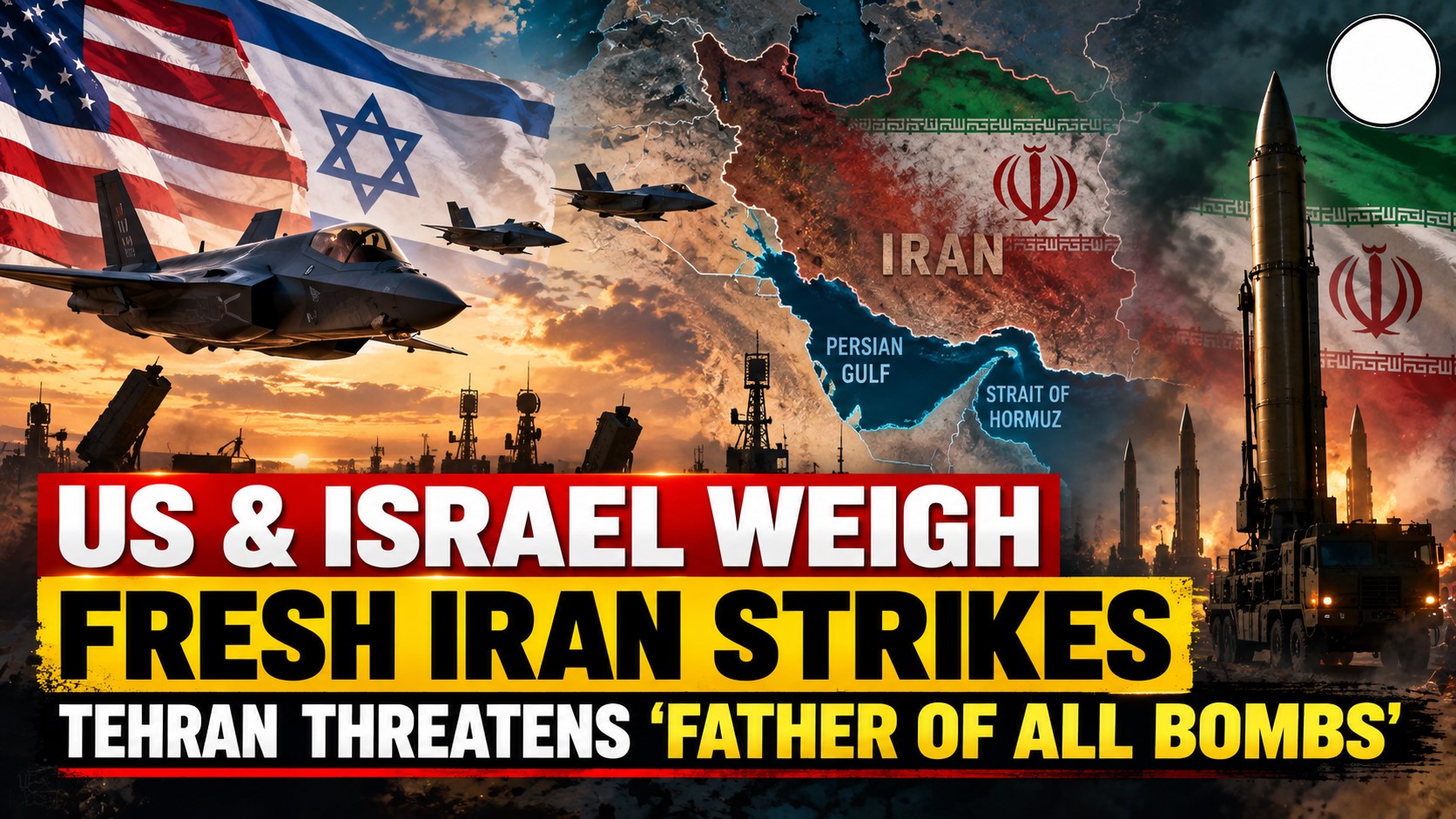
The United States and Israel have reportedly developed plans for possible renewed military strikes against Iran after the US midterm elections scheduled for November 3, as Tehran warns it could unveil a weapon it calls the “Father of All Bombs.” The developments have heightened concerns about another escalation in the Middle East.
According to a report by The New York Times, cited by multiple news organisations, US and Israeli military planners have prepared options for a short but intensive operation against Iranian targets. Possible targets reportedly include energy infrastructure, nuclear facilities and missile and drone arsenals. However, it remains uncertain whether US President Donald Trump will approve any new strikes.
US and Israel Reportedly Prepare Military Options
Reports say US and Israeli forces have intensified military preparations, including exercises designed to rehearse potential strike operations. US War Secretary Pete Hegseth reportedly met Israeli Prime Minister Benjamin Netanyahu to discuss regional security and the possibility of renewed action against Iran.
The reported timing is significant because the US midterm elections are approaching. Trump has previously indicated that he would wait until after the elections before considering further military action. A White House official declined to comment on military plans that may or may not exist, according to reports.
The reported preparations do not mean an attack is inevitable. The US president could still choose diplomacy or decide against authorising another operation.
Iran Threatens to Unveil ‘Father of All Bombs’
Amid the reports of possible renewed strikes, Islamic Revolutionary Guard Corps (IRGC) spokesperson Hossein Mohebbi said Iran was preparing to unveil a weapon described as the “Father of All Bombs.”
The statement was reported by Iranian state-affiliated media and subsequently covered by international news outlets. Iranian officials have not publicly provided independently verified details about the weapon’s design, size, range, destructive power or deployment status. It is therefore unclear whether the name refers to a bomb, a missile or another weapons system.
The phrase appears to be a rhetorical response to the US GBU-43/B Massive Ordnance Air Blast (MOAB), widely known as the “Mother of All Bombs.” The conventional US weapon weighs approximately 9,800 kilograms and was used in Afghanistan in 2017. It is not a nuclear bomb.
Why the Possible Targets Matter
The reported target list includes several strategically significant areas:
- Nuclear facilities: Sites associated with Iran’s nuclear programme remain central to the dispute between Tehran and Washington.
- Energy infrastructure: Damage to oil and other energy facilities could affect regional production, exports and global prices.
- Missile and drone capabilities: These systems are a major component of Iran’s military posture and its ability to retaliate.
The reported options reflect the potential scope of a renewed operation, not confirmation that any particular target has been selected or that an attack will take place.
Strait of Hormuz Adds to Regional Concerns
Tensions have also intensified around the Strait of Hormuz, a vital route for global oil and gas shipments. Recent reports have described damage to or fires aboard several tankers, based on Iranian statements, although independent confirmation of every reported incident has not been established.
The IRGC has warned that US military bases in the region could be targeted if Washington continues assisting commercial vessels navigating the strait. Iran’s control over access to the waterway remains a major point of leverage in negotiations, while any prolonged disruption could affect shipping costs, energy supplies and international markets.
Diplomacy Remains Uncertain
Diplomatic efforts to end the conflict have struggled amid disagreements over Iran’s nuclear programme, sanctions and navigation through the Strait of Hormuz. Iranian Foreign Minister Abbas Araghchi has said Tehran remains open to diplomacy while preparing to defend itself against further attacks, according to recent reporting.
The possibility of new US-Israeli strikes, combined with Iran’s warnings, leaves the region facing continued uncertainty. A renewed operation could trigger retaliation against military or commercial targets and place additional pressure on regional security and energy markets.
For now, the reported military plans and Iran’s weapons announcement should be treated as developments in an escalating standoff—not proof that another round of strikes has been authorised or that the claimed Iranian weapon has been independently verified.
DIT Media Network will continue tracking verified developments from the United States, Israel and Iran.
Comments (0)
No comments yet. Be the first to comment.